KPMG Pulse
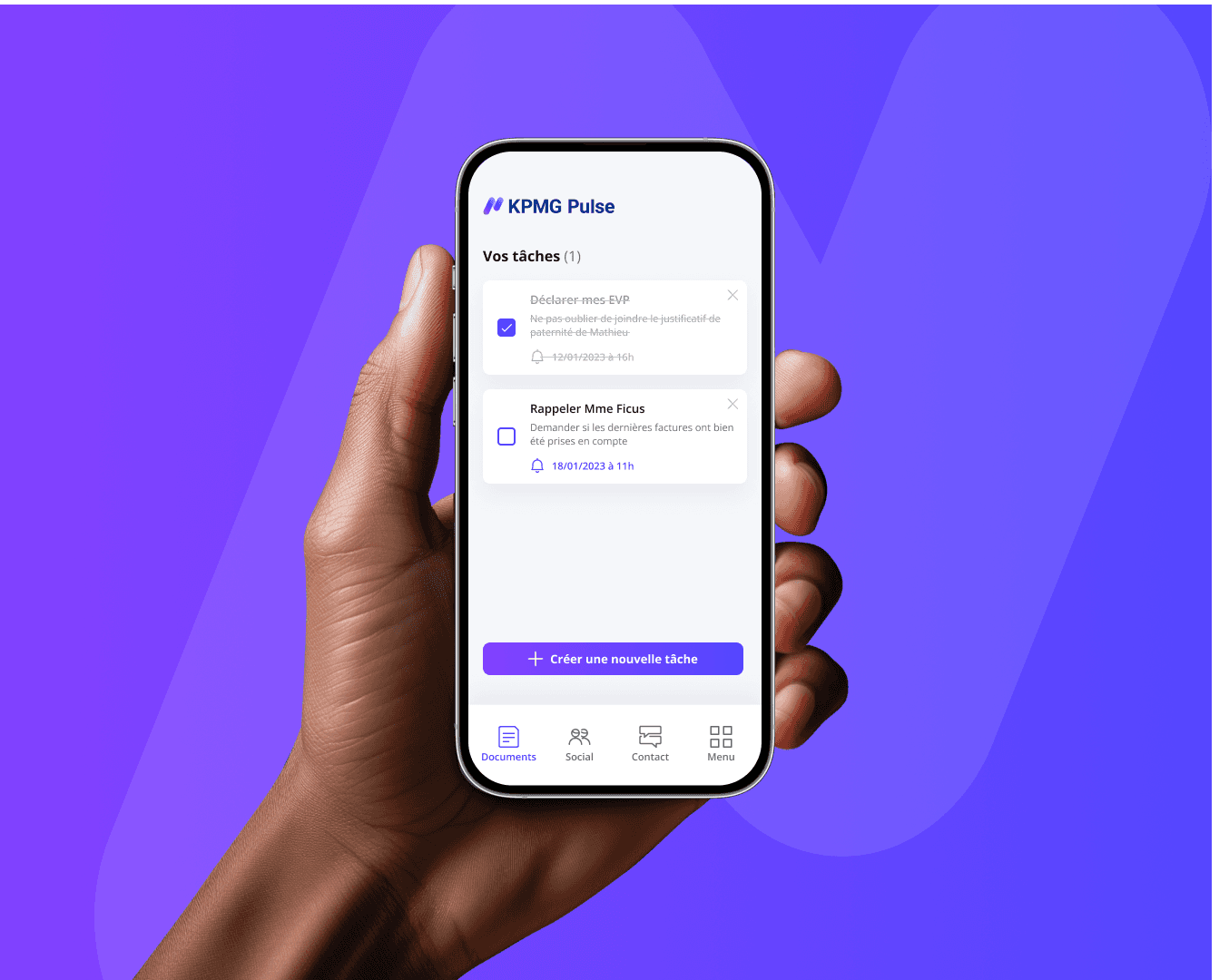
KPMG Pulse is a mobile platform designed to simplify collaboration between KPMG advisors and their clients by centralizing tasks, documents and accounting workflows in one place

Duration
6 months (2023)
Tech Stack



Summary
The goal of KPMG Pulse was to improve operational efficiency and reduce the friction caused by email overload, document loss and slow task follow-up.
This project was part of KPMG’s digital transformation strategy and aimed to accelerate task completion, improve collaboration and increase client autonomy.
Project Overview
Role: Lead Product Designer
Team: 1 PO, 6 Developers, QA, UX Researcher
Domain: B2B Procurement – Buyers & Suppliers
Responsibilities: Product strategy, stakeholder alignment, UX delivery
Methods: UX strategy, flow design, prototyping, final UI delivery
Problems
Before KPMG Pulse, collaboration between KPMG advisors and their clients relied heavily on emails, manual reminders and shared folders. This led to broken workflows and delays in accounting processes:
Clients regularly forgot to upload mandatory documents or didn’t know which ones were required.
Communication was scattered across emails, making it difficult to track requests and responsibilities.
There was no centralized view of pending actions, deadlines or missing files.
The experience was not optimized for mobile, even though many clients managed their work on the go.
Challenges
KPMG Pulse had to transform a manual, email-based accounting workflow into a simple mobile experience for non-technical users. The main challenges were:
Clarifying complex document and task flows
Engaging users with low digital maturity
Reducing friction caused by scattered communication
Maintaining trust with secure but simple authentication
Ensuring scalability and consistency across platforms
🎯 Success Metrics
UX Strategy
The design strategy focused on reducing friction and cognitive load by transforming fragmented email exchanges into a clear, guided mobile workflow. Since most KPMG clients are business owners with low digital tolerance, the experience had to feel simple, reassuring and actionable from the first interaction.
To achieve this, I defined three UX pillars:
Clarity through guidance
Mobile-first productivity
Reducing friction with smart UX
Design Methods
To ensure alignment and delivery at speed, I combined:
User flow modeling to simplify task and document logic
Design system foundations for consistent UI patterns
Usability testing loops with non-technical clients
Close collaboration with engineering to maintain feasibility

Impact
The launch of KPMG Pulse improved both client efficiency and internal delivery performance, while laying the foundation for future product evolution.
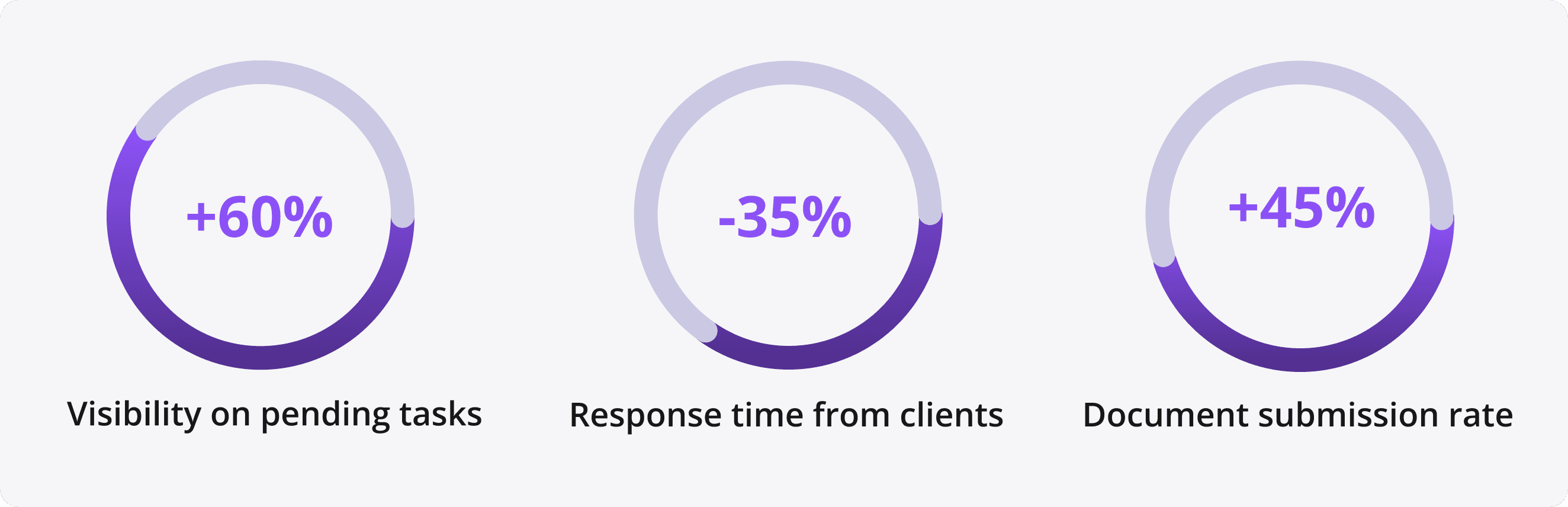
🎯 +60% visibility on pending tasks
🎯 +45% increase in document submission rate
🎯 –35% email exchanges thanks to in-app communication
✔️ +40% mobile adoption from clients in the first month
✔️ Reduced follow-up workload for KPMG advisors
✔️ Faster feature delivery thanks to reusable components
Learnings
Simplicity is a strategy : a task-first structure helped users act faster.
Design only works when aligned with delivery : collaboration with PO and devs was key to speed.
Guidance reduces friction : small decisions like inline help and feedback unlocked adoption.
A scalable structure matters : building with components made evolution faster


